


By Asad Ur Rahman
As a fan of the original How to Train Your Dragon trilogy, I approached its 2025 live-action remake with cautious optimism. A cherished story making a return to the screen always brings both nostalgia and critique. However, nothing quite prepares you for the experience of watching a world once animated with rich style, now reimagined in the realistic format of cinema. I was not alone in my apprehension—Reddit discussions had already started filling up with cautious optimism, technical feedback, and emotional parallels. So I entered the theater, eager to experience the film firsthand.
From the very first frame, it was evident that the film had opted for reverence rather than reinvention. Director Dean DeBlois, revisiting his own original work, seems to have approached the story as if it were sacred text. Much of the structure remains true—perhaps almost too much so. Numerous scenes unfold shot-for-shot, beat-for-beat, a decision that sparked both comfort and intrigue. Would this be an authentic retelling or simply a live-action reflection?
Beyond Binary: Navigating the Nuances of Algorithmic Bias and Technological Discrimination
Mason Thames as Hiccup was my initial adjustment. Online opinions were mixed—some viewers felt he lacked the quirky energy of animated Hiccup, while others appreciated the grounded sincerity he offered. I found myself leaning toward the latter perspective. Thames doesn’t dominate the screen in a conventional way, but his emotional vulnerability—particularly in quieter moments—felt genuine. He’s more reflective than charismatic, but perhaps that’s a natural progression in a more serious cinematic landscape.
Nico Parker’s portrayal of Astrid, however, felt instantly fitting. Reddit users remarked on how effectively she captured the confident, resolute warrior without coming across as overdone. Her presence on screen is both graceful and powerful, and her chemistry with Thames, though subtle, feels authentic.
Conversely, the supporting characters were more challenging to accept. The humor from Ruffnut, Tuffnut, and Snotlout—so crucial to the original’s lightheartedness—seems lackluster here. Numerous reviewers pointed out that what once appeared as comedic brilliance now teeters on awkwardness. In live-action, exaggerated antics risk veering into caricature, and regrettably, this adaptation doesn’t always maintain that balance smoothly. I found myself taken out of the narrative whenever the dialogue felt overly forced.
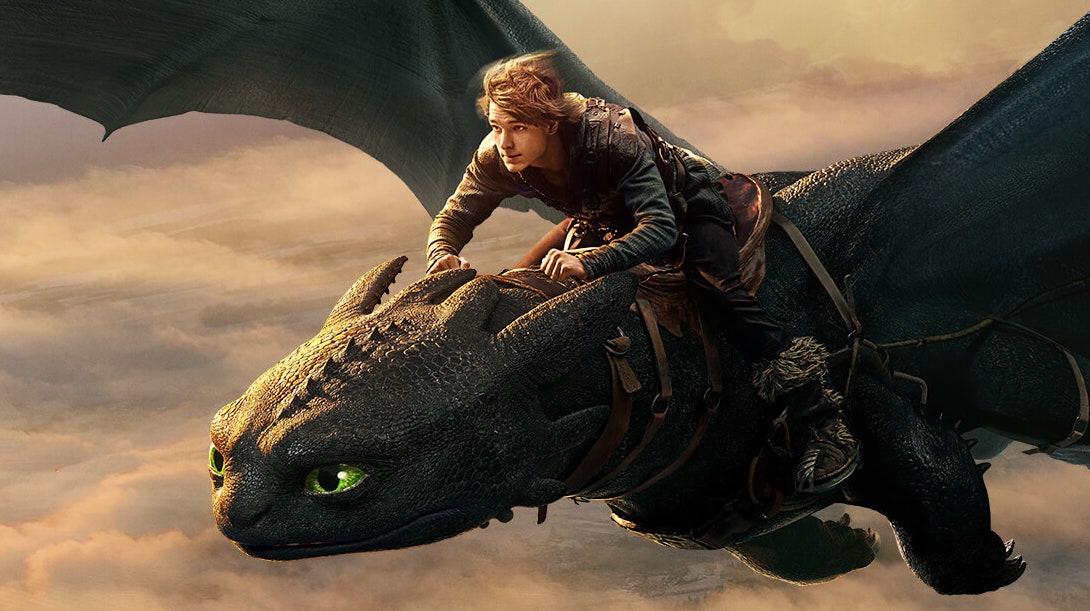
However, the true measure of the film rested with Toothless—and in this regard, the creators excelled. Reddit reviews have been almost unanimous in lauding the CGI dragon’s expressive eyes, fluid movement, and remarkable realism. Observing Toothless as he moves, blinks, and flies—he didn’t merely resemble a mythical creature; he felt alive. When Hiccup reaches out his hand for the first time and Toothless reacts with cautious curiosity, it was as if I witnessed magic being rediscovered.
That specific scene, celebrated online as the film’s emotional high point, resonated in the theater—quiet, slow, intimate, and flawless.
Where the film stumbles is not in its spectacle, but rather in its pacing. I observed, as many Reddit users did, that the second act feels prolonged. The conflict between Hiccup’s hidden friendship and the tribal pressures surrounding dragon hunting appears rushed at times, wandering at others. The emotional stakes do not always build to a climax as they did in the animated version, possibly because the story’s familiarity diminishes its urgency. Nevertheless, John Powell’s revised score—reorchestrated yet retaining its thematic essence—succeeded in elevating moments that might have otherwise seemed lackluster. While some viewers missed the animated version’s whimsical charm, many (myself included) valued the new score’s depth and resonance.
Visually, the film is a spectacle of shadows and scale. Berk is depicted with a rugged authenticity—jagged coastlines, billowing forges, and towering cliffs—but as one Reddit user noted, the vibrancy has faded. It’s overly grey, too grounded. The cinematography is undeniably stunning, yet it sacrifices wonder for heaviness. The aerial scenes, however, remain awe-inspiring. When Hiccup and Toothless soar into the sky, the screen expands, and I too felt myself lifted from the ground, if only for a moment.
However much I appreciated these highlights, I couldn’t shake the impression that the film relies heavily on pre-existing affection. As many Redditors remarked, “If you loved the original, you’ll likely enjoy this.” It provides little to attract a new audience unfamiliar with its lore. There exists a delicate balance between homage and reliance, and this adaptation precariously navigates it.
And yet, by the film’s conclusion, I found myself overlooking its missteps. The emotional finale—still as poignant as ever—reminded me of why this narrative persists. It addresses the enduring conflict between fear and understanding, between tradition and empathy. Reddit users had commended the film’s message for staying true, and I concur: in theme, if not always in tone, this adaptation retains the essence of the original.
Exiting the theater, I didn’t feel overwhelmed. I felt contemplative. This live-action How to Train Your Dragonisn’t a reimagining. It doesn’t ignite new passion into the tale. But it doesn’t tarnish it either. It feels like someone thoughtfully placing a cherished heirloom in a new frame—not for novelty, but for preservation.
For Indian viewers, who value myth, animal symbolism, and stories of unexpected friendships, the film may resonate well. It won’t captivate every viewer or win over every skeptic. But for those willing to reconsider—with moderated expectations and an open heart—it presents a journey worth embarking on.

)