

Modi 2.5 or NDA 3.0_ The Return of Coalition Politics in India.
Shahnawaz Mughal
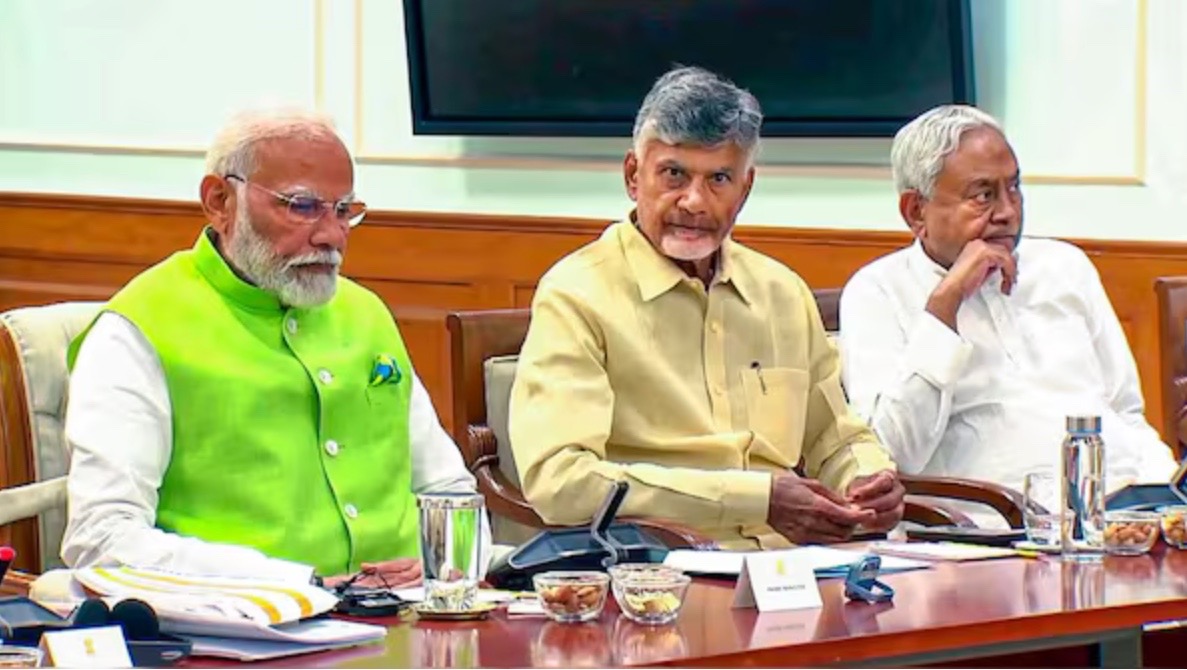
Narendra Modi’s third term as Prime Minister of India marks a significant shift in the political landscape, bringing back the era of coalition politics that had been absent for the last decade. The Bharatiya Janata Party (BJP), despite its significant electoral success, has fallen short of an absolute majority, securing 240 seats in the Lok Sabha, 32 seats shy of the majority mark of 272. To bridge this gap, the BJP has had to rely on its allies in the National Democratic Alliance (NDA), including Chandrababu Naidu’s Telugu Desam Party (TDP) with 16 seats and Nitish Kumar’s Janata Dal (United) [JDU] with 12 seats.
This coalition, however, brings with it a host of challenges. Both the TDP and JDU have historically kept a distance from BJP’s Hindutva politics, and they have voiced concerns over several key policies. The BJP’s ambition to enact a Uniform Civil Code (UCC), for instance, has met with opposition from these partners. The UCC aims to replace personal laws with a unified civil law, which would significantly affect minorities that have their own personal laws. The TDP has explicitly opposed the UCC in the past, while the JDU insists on extensive dialogue with all stakeholders before any enactment.
Moreover, the JDU has raised concerns over the Agniveer scheme, a recruitment initiative for the armed forces implemented in June 2022, which allows only four years of service without a pension. JDU spokesperson KC Tyagi has called for a revisit of its provisions. Another contentious issue is the countrywide caste census. While the BJP has resisted calls for such a census, Nitish Kumar’s Bihar government has independently carried out its own, highlighting a significant point of divergence within the coalition.
The coalition partners’ stances on other issues remain ambiguous. Both the TDP and JDU have not clearly articulated their views on the One Nation, One Election proposal. This proposal aims at conducting general elections and elections to the legislative assemblies simultaneously, raising concerns that such a move could marginalize regional issues in a diverse country like India. On the matter of Muslim reservation, the TDP’s manifesto for the Andhra Pradesh assembly elections in 2024 promises a 4% reservation for Muslims—a commitment it will now have to balance with its alliance with the BJP, which has not endorsed such measures.
Both the TDP and JDU have also consistently demanded special status for their states, Andhra Pradesh and Bihar, respectively—a demand the BJP has largely ignored over the past decade. This unresolved issue is likely to resurface as a significant point of contention in the current administration.
For the BJP, the shift from governing with an absolute majority to navigating a coalition is substantial. The ease with which the party could implement its agenda in 2014 and 2019 is no longer guaranteed. Keeping coalition partners satisfied will be crucial, and both Nitish Kumar and Chandrababu Naidu have a history of switching allegiances, adding an element of unpredictability to the government’s stability.
Prior to Modi’s dominance, Indian politics was characterized by coalition governments, notably the United Progressive Alliance (UPA) led by Manmohan Singh from 2004 to 2014. The UPA, consisting of parties ideologically opposed to the BJP and RSS style of politics, managed to govern through consensus and negotiation, setting a precedent for the coalition dynamics that Modi must now navigate. Narendra Modi’s lack of experience in coalition politics, given his tenure as the Chief Minister of Gujarat was marked by BJP’s dominance, adds another layer of complexity. The Rashtriya Swayamsevak Sangh (RSS), which had been sidelined during Modi’s earlier terms, now has an opportunity to exert more influence over the party’s decisions, potentially complicating the BJP’s efforts to maintain coalition harmony.
Additionally, Modi’s age adds another dimension to the political scenario. Turning 75 in 2027, he faces the party’s internal age of retirement rule, a policy he himself instituted. Although Amit Shah has assured that Modi will complete his term, the lack of an absolute majority and the necessity of coalition politics introduce a degree of uncertainty. The RSS’s increased grip over the party raises questions about whether Modi will be able to govern as effectively as before or if he will have to yield to the demands of coalition partners and internal party factions.
Acts of Violence Against Public Figures – A Growing Concern
The BJP’s ability to push through its agenda will be severely tested. Policies like the UCC and One Nation, One Election, along with the special status demands from TDP and JDU, and the Agnipath scheme’s scrutiny, will likely encounter significant resistance. Modi’s leadership will be under the microscope as he navigates these challenges, balancing the BJP’s broader objectives with the imperatives of coalition governance.
In this new era, the BJP’s strategies will need to be more nuanced and collaborative, respecting the diverse perspectives within the NDA. The return of coalition politics signifies a dynamic and potentially turbulent phase for Indian governance, where consensus-building will be paramount. Modi’s ability to adapt to this reality will determine the success and stability of his third term, shaping the future of Indian politics in the process.