

ManiMugdha Sharma
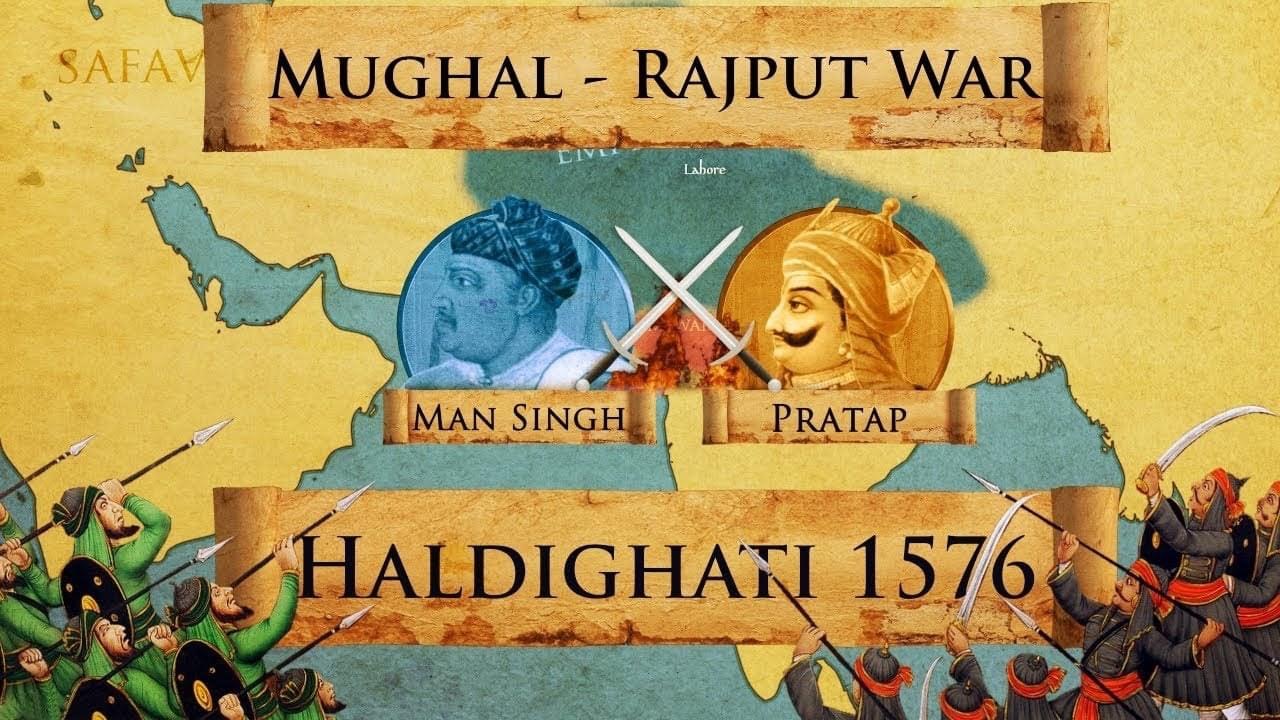
I have been reading many articles put out by various media houses recently on the outcome of the Battle of Haldighati. Many authors have started describing Rana Pratap fleeing the battlefield as a “tactical retreat”. This is only a shade better than declaring that Pratap won the battle, but still shows historical ignorance and perhaps even wilful distortion.
Some articles have also claimed that “new research” has found that the battle was fought on June 18, 1576, and not June 21 as the stone tablets at Rakta-Talai stated. It is not new research. Colonial translators in the early part of the 20th century had first figured out the date of this battle after translating Persian primary sources, like Abu’l Fazl’s Akbarnama.
Beveridge’s translation of Akbarnama clearly states June 18, 1576, as the date of the battle. Contrast this with the original published version of James Tod’s Annals and Antiquities of Rajasthan that says the battle was fought in July, 1576. The 1829 first print and the later reprints continued with this July date. But when you pick up the 1920 print, you find the date, June 18, 1576. The impact of the Akbarnama was clear on this.
A Sanghi uncleji was, apart from mounting ad hominem attacks on me, insisting that I read Veer Vinod, which he claimed was the real deal. Veer Vinod, which was commissioned by the Mewar court in the 19th century, was the first “authentic” history of Mewar. Authored by Kaviraj Shyamaldas, it states without any ambiguity that the Mughals were victorious at Haldighati. However, the date here is May 31, 1576.
Kaviraj Shyamaldas played a very important role in questioning James Tod’s version of events. Tod wrote that it was Prince Salim (the future Emperor Jahangir) who was leading the Mughal army and had a close shave when Rana Pratap threw a javelin at him. Tod also gave the fantastic story of Pratap’s horse Chetak leaping across a 30-foot ridge and taking his master to safety. The Veer Vinod version, that way, is less super-heroic. No lofty claims are made and Chetak “drops down dead” without making any giant leaps. The Rana’s brother Shakti Singh gives him his own horse and the Mewar king escapes to safety.
Not many know this, but Shyamaldas played a very important role in modern history writing. He had forcefully argued that the Prithviraja Raso was not 12th-century account but a much later work, composed between the late 16th century and early 17th century. Today, most historians accept this historicity of the Raso.
But for his work, and his reliance on Indo-Persian historiography, Shyamaldas was viciously attacked by conservative (and communal) Hindu voices for not being patriotic enough by rejecting “swadeshi” history and accepting the version of “our adversary” (read: Muslims).
But despite his leaps of imagination, even James Tod doesn’t say that Pratap won the battle or that it was some “tactical retreat”. It was defeat all the way for the Mewar king and he even lost his capital to the Mughals.
Now, what constitutes defeat? Let’s see what the great military theorist Clausewitz had to say about this. “What do we mean by the defeat of the enemy? Simply the destruction of his forces, whether by death, injury, or any other means—either completely or enough to make him stop fighting.”
Clausewitz also says that a defeat will include the destruction of army and the seizure of the capital. The most powerful and experienced land force in the world, the United States Army, has a doctrinal definition of defeat: “…to render a force incapable of achieving its objectives. Defeat has a temporal component and is seldom permanent.”
Defeat is seldom permanent, as the US Army notes. So, this also explains why the Mewar king was able to fight back in later years and make some gains in the process as the Mughals started focusing elsewhere. However, these gains were never significant, and he never had it again what he originally had until that fateful day of June 18, 1576.
At the expense of Mewar rose Amber and Marwar, making significant gains due to their association with the Mughals. These are facts of history that don’t change due to the changing nature of politics and society. An Amber princess today is trying hard to project Haldighati as a Mewar victory because the politics of our time is such that it embarrasses her that her great ancestor actually led the victorious Mughal forces.
One can understand her compulsions as she is a member of the BJP. But it is unfortunate that even the Archaeological Survey of India has withdrawn some stone tablets at Rakt-Talai that declared that the Mewar forces were defeated.
Even though the ASI hasn’t revealed its cards yet, as in they haven’t told us what they are going to write in the new tablets, they have said that this will be based on “factual information”. If only “factual information” were to be relied on, then there is no reason for doubt: the new tablets will also say that Rana Pratap was defeated and will give the correct date of June 18. But the kind of declarations that have been coming from the right-wing groups, there is some reason to suspect that a fictitious argument will be put forward to assuage hurt Rajput pride.