Home Blog Page 2

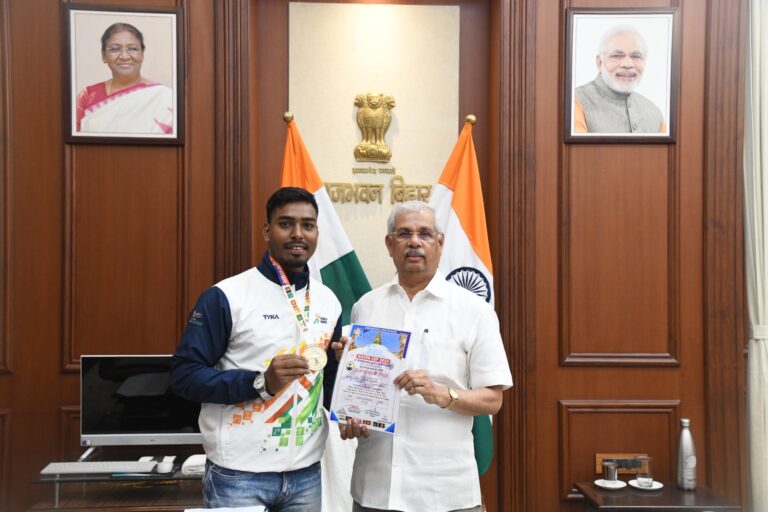
राज्यपाल से मिले कराटे खिलाड़ी जाबिर , मिला नौकरी का आश्वासन :

0

1 जून 2024 को नेपाल में आयोजित अंतरराष्ट्रीय कराटे प्रतियोगिता में भारत के तरफ से गए बिहार के जमुई जिला के खिलाड़ी मोहम्मद जाबिर अंसारी ने वहां भारत का परचम लहरा दिया था। इसी जीत की मुबारकबाद देने बिहार के राज्यपाल राजेंद्र अरलेकर ने जाबिर को बुलावा भेजा।

वहीं कुछ समय पहले पूर्व राज्य सभा सांसद मौलाना गुलाम रसूल बलियावी और राजद विधायक अख्तरुल इस्लाम शाहीन ने जाबिर अंसारी को मेडल लाओ नौकरी पाओ के तहत सरकारी नौकरी देने की बात रखी थी जो मामला तूल पकड़ने लगा था, उसी मामले पर राज्यपाल राजेंद्र अरलेकर ने भी अपनी ओर से जाबिर को आश्वासन दिया और कहा:

“जाबिर, मुझे बहुत अच्छा लगता है जब आप लगातार देश, राज्य और विश्विद्यालय के लिए पदक जीत रहे हैं। मेरा आशिर्वाद हमेशा आप के साथ और मैं आपके लिए हर मुमकिन मदद करूंगा। मैंने आपके नौकरी के लिए 2023 में ही बिहार सरकार को पत्र लिखा था परंतु उसका जवाब नहीं आया, फिर लिखूंगा और बिहार खेल सचिव से बात करूंगा, और पटना विश्वविद्यालय के कुल पति से विश्वविद्यालय में ही नौकरी की बात करूंगा।”

बताते चलें, मोहम्मद जाबिर अंसारी बिहार राज्य के जमुई ज़िला के नक्सली प्रभावित तुम्बा पहाड़ गांव से आते हैं, उनके पिता मोहम्मद इम्तियाज अंसारी सरकारी स्कूल के शिक्षक हैं और माता बीड़ी बनाने का काम करती है। वह अभी खुद पटना विश्विद्यालय से स्नातक पूरा कर अब मास्टर ऑफ आर्ट्स में पोस्ट ग्रेजुएट की पढ़ाई कर रहे हैं ।

Modi 2.5 or NDA 3.0: The Return of Coalition Politics in India

Modi 2.5 or NDA 3.0_ The Return of Coalition Politics in India.

Shahnawaz Mughal

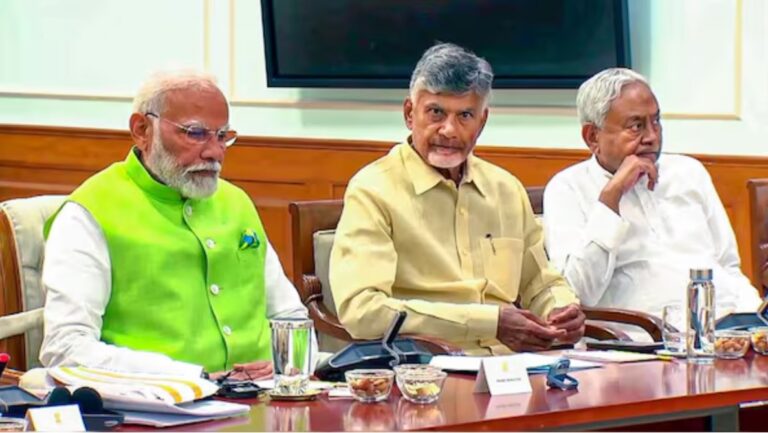
Narendra Modi’s third term as Prime Minister of India marks a significant shift in the political landscape, bringing back the era of coalition politics that had been absent for the last decade. The Bharatiya Janata Party (BJP), despite its significant electoral success, has fallen short of an absolute majority, securing 240 seats in the Lok Sabha, 32 seats shy of the majority mark of 272. To bridge this gap, the BJP has had to rely on its allies in the National Democratic Alliance (NDA), including Chandrababu Naidu’s Telugu Desam Party (TDP) with 16 seats and Nitish Kumar’s Janata Dal (United) [JDU] with 12 seats.

This coalition, however, brings with it a host of challenges. Both the TDP and JDU have historically kept a distance from BJP’s Hindutva politics, and they have voiced concerns over several key policies. The BJP’s ambition to enact a Uniform Civil Code (UCC), for instance, has met with opposition from these partners. The UCC aims to replace personal laws with a unified civil law, which would significantly affect minorities that have their own personal laws. The TDP has explicitly opposed the UCC in the past, while the JDU insists on extensive dialogue with all stakeholders before any enactment.

Moreover, the JDU has raised concerns over the Agniveer scheme, a recruitment initiative for the armed forces implemented in June 2022, which allows only four years of service without a pension. JDU spokesperson KC Tyagi has called for a revisit of its provisions. Another contentious issue is the countrywide caste census. While the BJP has resisted calls for such a census, Nitish Kumar’s Bihar government has independently carried out its own, highlighting a significant point of divergence within the coalition.

The coalition partners’ stances on other issues remain ambiguous. Both the TDP and JDU have not clearly articulated their views on the One Nation, One Election proposal. This proposal aims at conducting general elections and elections to the legislative assemblies simultaneously, raising concerns that such a move could marginalize regional issues in a diverse country like India. On the matter of Muslim reservation, the TDP’s manifesto for the Andhra Pradesh assembly elections in 2024 promises a 4% reservation for Muslims—a commitment it will now have to balance with its alliance with the BJP, which has not endorsed such measures.

Both the TDP and JDU have also consistently demanded special status for their states, Andhra Pradesh and Bihar, respectively—a demand the BJP has largely ignored over the past decade. This unresolved issue is likely to resurface as a significant point of contention in the current administration.

For the BJP, the shift from governing with an absolute majority to navigating a coalition is substantial. The ease with which the party could implement its agenda in 2014 and 2019 is no longer guaranteed. Keeping coalition partners satisfied will be crucial, and both Nitish Kumar and Chandrababu Naidu have a history of switching allegiances, adding an element of unpredictability to the government’s stability.

Prior to Modi’s dominance, Indian politics was characterized by coalition governments, notably the United Progressive Alliance (UPA) led by Manmohan Singh from 2004 to 2014. The UPA, consisting of parties ideologically opposed to the BJP and RSS style of politics, managed to govern through consensus and negotiation, setting a precedent for the coalition dynamics that Modi must now navigate. Narendra Modi’s lack of experience in coalition politics, given his tenure as the Chief Minister of Gujarat was marked by BJP’s dominance, adds another layer of complexity. The Rashtriya Swayamsevak Sangh (RSS), which had been sidelined during Modi’s earlier terms, now has an opportunity to exert more influence over the party’s decisions, potentially complicating the BJP’s efforts to maintain coalition harmony.

Additionally, Modi’s age adds another dimension to the political scenario. Turning 75 in 2027, he faces the party’s internal age of retirement rule, a policy he himself instituted. Although Amit Shah has assured that Modi will complete his term, the lack of an absolute majority and the necessity of coalition politics introduce a degree of uncertainty. The RSS’s increased grip over the party raises questions about whether Modi will be able to govern as effectively as before or if he will have to yield to the demands of coalition partners and internal party factions.

Acts of Violence Against Public Figures – A Growing Concern

The BJP’s ability to push through its agenda will be severely tested. Policies like the UCC and One Nation, One Election, along with the special status demands from TDP and JDU, and the Agnipath scheme’s scrutiny, will likely encounter significant resistance. Modi’s leadership will be under the microscope as he navigates these challenges, balancing the BJP’s broader objectives with the imperatives of coalition governance.

In this new era, the BJP’s strategies will need to be more nuanced and collaborative, respecting the diverse perspectives within the NDA. The return of coalition politics signifies a dynamic and potentially turbulent phase for Indian governance, where consensus-building will be paramount. Modi’s ability to adapt to this reality will determine the success and stability of his third term, shaping the future of Indian politics in the process.


Acts of Violence Against Public Figures – A Growing Concern

Acts of Violence Against Public Figures – A Growing Concern

– Shahnawaz Mughal

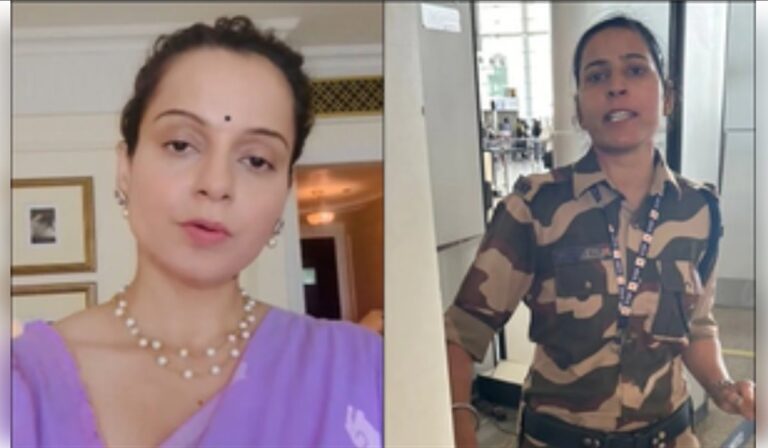
Recently, Kangana Ranaut, a BJP MP and a prominent Bollywood actress, faced a shocking incident at Chandigarh airport where she was slapped by CISF personnel Kulvinder Kaur. This confrontation was reportedly a reaction to Kangana’s controversial statement on the farmer protests against the Modi government’s 2020 farm laws. In a now-deleted tweet, she alleged that women participating in the protests were available for 100 rupees, which drew widespread criticism. Kaur, aggrieved by Kangana’s comments, was heard in a video circulating on the internet saying that her mother was sitting at the farmer protest when Kangana made those remarks. This incident highlights the growing tensions and the volatile environment surrounding political discourse in India.

Kangana Ranaut’s comments came at a time when the country was deeply divided over the new farm laws, which had led to widespread protests, particularly in Punjab and Haryana. Her statement was seen as not only derogatory but also dismissive of the genuine grievances of the farmers. The backlash she received was immediate and intense, culminating in the incident at the airport. This incident not only underscores the heightened emotions surrounding political debates but also raises questions about the role of security personnel in maintaining decorum.

This incident is not an isolated one. Indian politicians have often been targets of public anger and humiliation. Here are some notable examples:

1. Arvind Kejriwal: The Delhi Chief Minister and Aam Aadmi Party leader was slapped during a roadshow in 2014. In 2016, ink was thrown at him during a public event. These incidents were seen as expressions of frustration and anger against his policies and style of governance. Each attack not only made headlines but also sparked debates on the safety of public officials.
2. Sharad Pawar: The NCP leader was slapped by a man at a public event in 2011. The attacker was protesting against inflation and corruption. This incident brought to light the deep-seated anger among the public and the lengths to which individuals might go to express their dissent.
3. Manmohan Singh: The former Prime Minister had a shoe thrown at him by a journalist in 2009. The journalist was protesting against the 1984 anti-Sikh riots and the perceived lack of justice for the victims. This incident highlighted the ongoing grievances of the Sikh community and the sensitive nature of historical injustices in India.
4. LK Advani: The senior BJP leader faced a slipper attack during an election rally in 2009. The incident was a result of political rivalry and intense competition during the elections. It underscored the high stakes involved in Indian politics and the personal risks politicians face.
5. Mamata Banerjee: The West Bengal Chief Minister narrowly escaped being slapped at a public meeting in 2012. The attacker was reportedly disgruntled with her government’s policies. This incident illustrated the volatile nature of regional politics in India and the personal animosities that can arise.
6. Jitan Ram Manjhi: The former Bihar Chief Minister had ink thrown at him during a rally in 2015. The attack was seen as a symbolic act of protest against his leadership. It reflected the dissatisfaction among certain sections of the public and the symbolic power of such acts.
7. Sushil Kumar Modi: The Bihar Deputy Chief Minister faced an ink attack in 2018. The incident occurred during a function in Patna and was seen as an act of defiance against his political stance. It raised questions about the security arrangements for public figures.
8. Kanhaiya Kumar: The CPI candidate and former JNUSU president had ink thrown at him in 2019 and was also slapped by Daksh Chaudhary during his campaign for the 2024 Lok Sabha elections in Northeast Delhi. These incidents were part of a broader pattern of political violence and harassment faced by young and emerging leaders in India.

These acts of violence are uncalled for and particularly troubling when committed by security personnel, as they undermine public trust in those meant to protect. While politicians and activists are entitled to their opinions, they must avoid crossing the line into humiliating or degrading others. Kangana Ranaut’s comments were certainly distasteful and could have been avoided, but resorting to violence is never the answer.

Violence against public figures not only poses a threat to their personal safety but also undermines the democratic process. It discourages open debate and creates an environment of fear and intimidation. When security personnel are involved in such acts, it further erodes the trust that the public places in these institutions. The role of security forces is to protect and maintain order, not to become participants in the political fray.

Politicians and activists also have a responsibility to foster a culture of respectful discourse. Public statements should be made with consideration of their impact on various communities and individuals. Inflammatory and derogatory remarks can incite violence and deepen societal divisions. It is crucial for public figures to set an example of constructive and respectful communication.

The media also plays a significant role in shaping public opinion and political discourse. Sensationalism and biased reporting can exacerbate tensions and contribute to a culture of aggression. Responsible journalism should aim to inform and educate the public, rather than inflame passions and provoke hostility.

In conclusion, civil discourse and respectful disagreement should be the cornerstones of our democratic society. Acts of violence against public figures, especially when perpetrated by those entrusted with security, are unacceptable and harmful to the fabric of democracy. At the same time, public figures must exercise caution and responsibility in their statements to avoid inciting hatred and violence. A commitment to non-violence, mutual respect, and constructive dialogue is essential for the health and stability of our democratic institutions.

(Views are Personal)


My perspective on Samajwadi Party’s resurgence in Uttar Pradesh

My perspective on the Samajwadi Party’s resurgence in Uttar Pradesh

Shahnawaz Mughal 

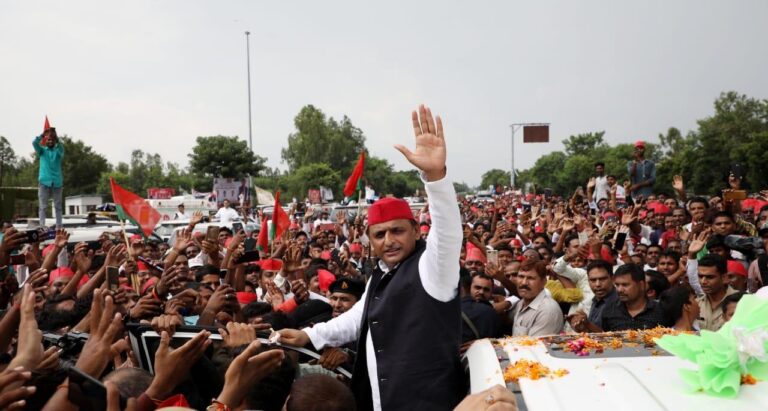
The 2024 Indian parliamentary elections have undoubtedly reshaped the political landscape in Uttar Pradesh. Witnessing the Samajwadi Party (SP) emerge as the single largest party with 37 seats is nothing short of remarkable. This victory not only reflects significant voter sentiment but also signals potential shifts in the political dynamics of the state and beyond. Notably, the party broke its previous record of 35 seats, which it won in the 2004 elections. This resurgence is particularly impressive considering the party’s poor performances in recent elections, winning only 5 seats each in the 2014 and 2019 national elections and losing the 2017 and 2022 Uttar Pradesh assembly elections to the BJP.

In my view, the central issues that dominated this election were anti-incumbency, inflation, unemployment, and concerns about the Constitution. The controversial laws affecting the Muslim community, such as the triple talaq ban, the Citizenship Amendment Act, and the NRC, have deeply impacted the electorate. These issues, coupled with incidents of mob lynching and harsh measures such as bulldozer action and hate speeches by the ruling BJP, have clearly influenced public sentiment. This environment has allowed Akhilesh Yadav to successfully consolidate Muslim votes, leveraging these concerns effectively.

Akhilesh Yadav’s PDA formula—targeting Pichda (OBC), Dalit (SC), and Alpsankhyak (Muslim) communities—has proven to be a strategic masterstroke. His ability to unify these groups played a crucial role in Samajwadi Party’s success, with significant victories among OBC, SC, and Muslim voters. This demographic strategy has clearly resonated with the electorate.

The formation of the INDIA alliance, led by the Indian National Congress, has also been pivotal. This coalition has not only broadened the electoral base but also strategically benefited both the SP and INC, with the INC increasing its strength from a mere 1 to 6 MPs from Uttar Pradesh. The alliance was effective in cutting through BJP’s Hindutva narrative.

The voter turnout, while moderate, reflects a complex voter behavior dynamic. Many BJP supporters seemingly abstained from voting, possibly due to disillusionment or overconfidence in their earlier achievements, such as the inauguration of the Ram Mandir in Ayodhya. This abstention likely contributed to the unexpected outcomes in this election.

The recent results signify a significant challenge to the BJP’s dominance in Uttar Pradesh. The Samajwadi Party’s resurgence suggests a realignment in the state’s political landscape, potentially impacting the 2027 assembly elections and the broader national political environment. Akhilesh Yadav’s leadership has been instrumental in this resurgence. His strategic focus on key issues, coalition-building efforts, and addressing voter concerns have resonated well with the electorate. His continued influence will likely be crucial in shaping the SP’s future strategies.

The reaction to Samajwadi Party’s performance has been significant, with widespread media coverage highlighting the unexpected strength of the party. This resurgence has sparked discussions about potential shifts in political power in Uttar Pradesh in the 2027 assembly elections.

In my opinion, the 2024 elections in Uttar Pradesh have set the stage for significant changes. The SP’s victory reflects deep-seated public sentiments and the effectiveness of strategic alliances. As we move forward, the political landscape in Uttar Pradesh and possibly at the national level may see further transformations. The success of the SP is not just a testament to Akhilesh Yadav’s leadership but also to the electorate’s readiness for change.

(Views are Personal)

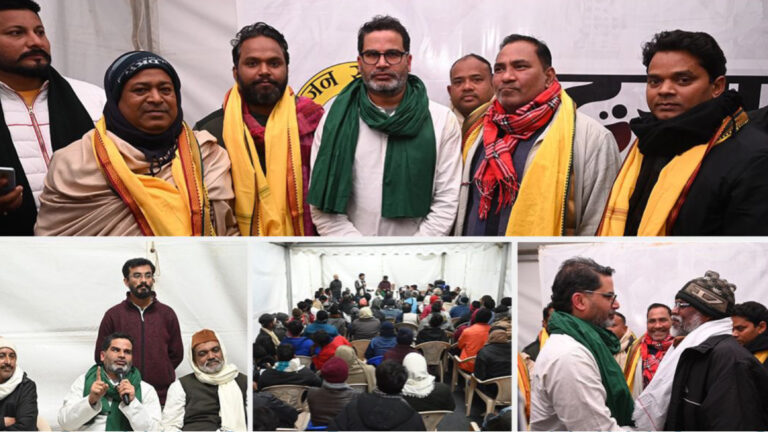
प्रशांत किशोर मुसलमानों के नए मसीहा…..

जनता की याददाश्त बहुत कम होती है और उसपर भी भारतीय मुस्लिम जनता की बात हो तो उनकी तो याददाश्त होती भी है यह भी एक सवाल है। आजकल बहुत से मुस्लिम लड़के लड़कियों को बिहार में प्रशांत किशोर (Prashant Kishor) नाम का नया मसीहा मिला है। जिसकी वीडियो शेयर होती हैं यह बताते हुए कि पैग़ंबर मुहम्मद की सियासत पर क्या राय थी। यह वीडियो शेयर करने वाले वही हैं जिनको लगता है कि पूरी ज़िन्दगी क़ुरान और हदीस पढ़ने वाले उलेमा रसूल-अल्लाह की सियासी बातों को ग़लत समझते हैं।

ख़ैर जो भी हो। असल में जो लोग प्रशांत किशोर के पीछे नज़र आ रहें हैं वो ख़ुद को मोदी सरकार के ख़िलाफ़ दिखाने का दावा भी रखते हैं। यह लोग भारत की ज़्यादातर परेशानियों की वजह मोदी सरकार को मानते हैं और इनके हिसाब से 2014 के बाद मुल्क के हालात ख़राब हुए हैं। अब यही लोग प्रशांत किशोर की महफ़िलों में नज़र आते हैं।

प्रशांत किशोर के गुणगान करने वाले जनता को बेवक़ूफ़ समझते हैं या ख़ुद को

ऐसे में मैं अकसर सोचता हूँ कि या तो ये सब प्रशांत किशोर के गुणगान करने वाले जनता को बेवक़ूफ़ समझते हैं या इनकी ख़ुद की अक़्ल को ही ताले पड़ गए हैं।

मान लीजिए मोदी सरकार का 2014 में सत्ता में आना मुल्क के लिए बुरा था और जनता उस से परेशान है तो कोई इनसे ये पूछे के प्रशांत किशोर 2014 में क्या कर रहे थे ? प्रशांत किशोर की भूमिका 2014 के चुनाव में मोदी जी को जिताने में कितनी एहम थी इसका अंदाज़ा 18 जून 2014 की scroll.in की एक रिपोर्ट से लगाया जा सकता है जिसमें प्रशांत किशोर(Prashant Kishor) और उसके संगठन को इस बात की दाद दी गयी थी के आरएसएस के साथ मिलकर चुनाव की सारी रणनीति मोदीजी के लिए वही बना रहे थे। मीडिया क्या बोलेगा यह भी यही तय कर रहे थे।

Image

इस से पहले अक्टूबर 2013 में इकनोमिक टाइम्स की एक ख़बर के हिसाब से प्रशांत किशोर (Prashant Kishor) मोदी जी की चुनावी रणनीति के सबसे महत्वपूर्ण व्यक्ति थे। उनका ऑफ़िस मोदी जी के मुख्यमंत्री आवास के अंदर ही स्थित था।

Image

सच तो यह है कि प्रशांत किशोर मशहूर ही इस वजह से हुए कि उन्होंने 2014 की भाजपा की जीत में ख़ास रोल निभाया था। ऐसे में अगर किसी को लगता है कि मोदीजी की सरकार का 2014 में बनना ग़लत था तो आप उस चुनाव के सबसे अहम रणनीतिकार को सभी आरोपों से बरी की बिना पर करते हैं ?

चलिए कुछ लोग कहते हैं कि नहीं तब प्रशांत किशोर पैसे के लिए काम कर रहे थे और अब उनको समाज की फ़िक्र है। अच्छा यानि कि पैसा कमाने के लिए आप किसी भी विचारधारा के साथ जा सकते हैं। तो ऐसे में आपको मीडिया पर बिकने का आरोप नहीं लगाना चाहिए। वो भी तो सिर्फ़ पैसा कमा रहे हैं।

प्रशांत किशोर ने असल में देश की राजनीती को पूंजीवाद की तरफ धकेल दिया है।

कुछ लोग कहेंगे कि प्रशांत किशोर तब नासमझ थे। वैसे ही जैसे शेहला दूसरे ख़ेमे में थी। लेकिन कमसेकम शेहला खुल कर कह रही हैं कि वो पहले ग़लत थी। प्रशांत किशोर (Prashant Kishor) कभी नहीं कहते। और कह भी दें तो क्या आप ऐसे इंसान को नेता या लीडर तसलीम करेंगे जिसको अपने सामने होने वाली सियासत तक न समझ आती हो और उसको कई साल लगे हों समझने में?

लीडर तो असल में वो होता है जो हवा के बहने से पहले भांप कर अपने लोगों को आगाह कर दे। ऐसा वो कौन सा मंत्र दे रहे हैं जो आपको नहीं पता ? राष्ट्रीय जनता दल में परिवारवाद का मुद्दा भाजपा 30 साल से लिए खड़ी है। नीतीश विचारधारा विहीन हैं ये भी अरसे से सबको पता है। बिहार में मुस्लिम राजनीती हाशिये पर है ये भी कोई नया इल्म नहीं। तो आपको प्रशांत किशोर (Prashant Kishor) ने क्या बताया ?

प्रशांत किशोर (Prashant Kishor) ने असल में देश की राजनीती को पूंजीवाद की तरफ धकेल दिया है। एक टीम प्रोफेशनल्स की नौकरी पर रखी जाती है। सोशल मीडिया मैनेज होता है। टेक्नोलॉजी का इस्तेमाल होता है। पैसे पर लोग नौकरी करते हैं। इसने यह तय किया है कि हिंदू हो या मुसलमान, राजनीती वही करेगा जिसके पीछे पूंजीपति होंगे। और आप खुद जानते हैं कि ऐसा होने से मुस्लिम की भागीदारी घटेगी, बढ़ेगी नहीं। हाँ कुछ अंग्रेज़ी बोलते हुए नाम निहाद के मुसलमान नेता बनाये जाएंगे।

सवाल बहुत हैं लेकिन सवाल करेगा कौन ?

Beyond Binary: Navigating the Nuances of Algorithmic Bias and Technological Discrimination

0

Asad Ur Rahman

Artificial intelligence (AI) and machine learning are rapidly proliferating, and their pervasive integration into our everyday lives has given rise to a complex and multifaceted issue that demands our immediate attention: algorithmic bias, which has the potential to perpetuate and exacerbate technological discrimination. By examining the intricate web of social, technical, and ethical factors that contribute to its manifestation, this essay seeks to illuminate the far-reaching implications of this phenomenon. The insidious ways in which algorithms, when infused with human biases, can amplify and entrench existing inequalities will be revealed through a thorough examination of real-world examples. This will result in a cascade of unintended yet profound consequences across society. The tentacles of algorithmic bias extend far and wide, casting a pall over the promise of a more equitable and just society. From the opaque machinations of recruitment systems to the consequential decisions of credit scoring algorithms, algorithmic bias casts a pall over the promise of a more just and equitable society. It is imperative that we develop a nuanced understanding of the underlying causes and dynamics that give rise to this pernicious problem as we steer through this uncharted territory. To develop more inclusive and ethically robust technologies that serve the interests of all, we must grapple with the complexities of algorithmic bias. As we seek to create a future where the transformative power of AI is harnessed for the benefit of all humanity, free from prejudice and discrimination, this essay seeks to not only shed light on the formidable challenges we face in addressing this issue but also explore potential avenues for redress and mitigation.

Overview of Algorithmic Bias

Algorithmic bias is a ubiquitous and subtle phenomena that arises when systems utilizing artificial intelligence (AI) display unjust preferences or prejudice against particular groups or individuals as a result of intrinsic defects in their design, data processing, or implementation procedures. This bias can take many different forms, resulting in biased decisions that can have far-reaching effects in crucial sectors like lending, recruiting, and law enforcement. For example, a well-known software company’s hiring algorithm mistakenly gave preference to male applicants over female ones since it was trained mostly on data samples from male workers, which led to the false belief that their characteristics were more desired. In a similar vein, research has demonstrated that ethnic minorities are much more likely than Caucasians to be incorrectly identified by face recognition technology. This discrepancy may be related to the testing phase’s usage of fewer varied data sets.

Numerous important aspects can be identified as the roots of algorithmic bias. First off, bias emerges mostly as a result of poor data selection. Algorithms that are trained on datasets that are not representative of the whole population or that have historical biases in them may not effectively reflect underrepresented groups, including women or people from different ethnic

backgrounds. Furthermore, if algorithms’ structure and programming do not take diversity and inclusivity into consideration, it may amplify preexisting biases. Ultimately, the subjective choices made by data scientists and engineers during the development stage may unintentionally introduce biases of their own into the algorithms, giving preference to some qualities over others depending on personal convictions or societal stereotypes.

It is becoming more and more clear as we explore the intricate world of algorithmic bias that dealing with this difficult problem calls for an all-encompassing and sophisticated strategy. We may start to disentangle the complex web of factors that contribute to the persistence of bias in AI systems by looking at the interactions between algorithm design, data selection, and human prejudices in technology. We can only hope to fully utilize AI’s enormous potential and make sure that its advantages are shared fairly among all facets of society by making a concentrated effort to recognize and reduce these biases.

Impact of Algorithmic Bias

Deeply ingrained in many industries, algorithmic biases have far-reaching effects that transcend technology and into the core of our social and economic institutions. Due to the widespread prevalence of these biases, a thorough analysis of their effects is necessary. Not only do they compromise market efficiency, but they also sustain social injustices, disproportionately impacting underprivileged people. It is not only a question of technological advancement to address these prejudices; doing so is a basic requirement for creating a society that respects justice, equity, and fairness.

The effects of algorithmic biases on the economy are profound and wide-ranging. Biases in algorithms can cause less-than-ideal decision-making processes, which can lead to resource misallocation and a decline in market efficiency. Such biases have repercussions that go beyond just monetary losses; they can also weaken public confidence in the organizations that use these algorithms, which can result in expensive legal battles and harm to an organization’s reputation. Furthermore, it is impossible to overestimate the societal consequences of algorithmic biases.

These prejudices have the power to maintain and even worsen already-existing disparities, erecting obstacles to access in vital domains like work, healthcare, and the legal system. Biased algorithms can provide discriminatory results that can have a significant and long-lasting effect on people’s lives as well as communities, increasing structural disadvantages and reducing prospects for social mobility.

In order to demonstrate the concrete consequences of algorithmic biases, let us examine two moving example scenarios. One well-known instance of AI-powered recruitment systems unintentionally favoring some demographic groups over others occurs in the context of hiring procedures. Due to the system’s training of the algorithm using past data that mirrored the prejudices of human decision-makers, biased hiring practices were sustained, resulting in unequal employment possibilities.

Such biases can have long-term repercussions on career paths, wage discrepancies, and the general economic well-being of affected populations. They are not limited to the recruiting process alone. Analogously, it has been demonstrated that predictive policing algorithms in the field of law enforcement favorably target particular socioeconomic and ethnic groups. By over policing some communities, the use of these biased algorithms can undermine public confidence in law enforcement and feed negative stereotypes. Such prejudices have serious negative effects on society since they can heighten tensions between the public and law enforcement, which undermines initiatives to create a society that is more just and equal.

The takeaways from these case studies are a strong cry for action. They highlight how detrimental algorithmic biases are to society and the economy, and how urgently they must be addressed. A multifaceted strategy that includes technical advancements, legislative modifications, and educational programs is needed to mitigate these prejudices. Building strong frameworks to audit and test algorithms is essential if we want to make sure they are transparent, responsible, and do not produce biased results. Furthermore, authorities need to take the initiative to control the application of algorithms by establishing precise rules and specifications for their creation and application. The necessity of educational initiatives that inform people about the potential biases in algorithms and provide them with the skills to spot and oppose discriminatory practices is equally crucial.

It is the common obligation of multiple stakeholders to work together to address the consequences of algorithmic biases. To bring about the required reforms, corporations, governments, and civil society organizations must collaborate. We can build a more inclusive and equitable future where the advantages of algorithmic decision-making are effectively harnessed for the greater good and the risks of bias and discrimination are effectively mitigated by fostering collaborations between technologists, policymakers, and community leaders. We must travel this difficult but necessary route if we are to create a society that genuinely values equality, diversity, and fairness for all.

Technical and Managerial Solutions to Combat Algorithmic Bias

The rising pervasiveness of algorithmic bias across multiple sectors highlights the need for a multifaceted approach that integrates managerial and technical solutions to effectively handle this intricate issue. It is not just a desirable objective to build comprehensive strategies that give justice and ethical considerations in AI systems priority; it is an urgent necessity that calls for coordinated action and urgent attention from stakeholders in the technology, government, and social sectors.

Technical solutions that aim to lessen the innate biases in AI systems through creative approaches to algorithm design and data handling are at the forefront of attempts to counteract algorithmic bias. Creating more equitable algorithms that actively work to reduce bias through the use of strategies like debiasing data sets, adding diversity to training data, and utilizing machine learning techniques designed to reduce bias are some examples of such approaches. These methods seek to develop AI systems that are more egalitarian by nature and less likely to reinforce biased results by deliberately tackling the computational roots of bias.

The requirement for increased openness in AI decision-making procedures is equally crucial. An important step in this approach is the adoption of explainable AI (XAI) frameworks, which provide users and regulators with a better understanding of how AI systems make decisions. Through elucidating the frequently ambiguous inner workings of algorithms, XAI frameworks promote responsibility, trust, and the capacity to recognize and address instances of bias. To further guarantee that the creation of AI systems is directed by a strong moral compass, ethical guidelines, frequent ethical audits, and training for AI developers on the ramifications of impartial and ethical AI design must all be implemented.

But technological fixes by themselves cannot completely solve the problems caused by algorithmic bias. In addition to providing monitoring, accountability, and enforcement mechanisms, regulatory and management measures are also necessary components of effective mitigation strategies. Establishing internal governance frameworks, such ethics committees within companies, is essential to guaranteeing that AI initiatives follow moral guidelines and give equality and nondiscrimination first priority. These committees review and keep an eye on AI systems to spot and rectify instances of bias, acting as protectors of moral AI practices.

Enacting laws requiring AI systems to undergo fairness evaluations and bias monitoring is a potent weapon for enacting change at the policy level. One prominent example of such a regulation endeavor is the Artificial Intelligence Act of the European Union, which lays out a thorough framework for the creation and application of AI systems with an emphasis on responsibility, transparency, and justice. These policies level the playing field, promote the adoption of best practices in AI development, and hold companies responsible for the results of their AI systems by laying out explicit criteria and enforcing them.

Moreover, it is impossible to overestimate the significance of international standards in coordinating efforts to counter algorithmic prejudice. Establishing and upholding international norms that advance equity and morality in AI requires cooperation between governments, nongovernmental organizations, and the commercial sector. By guaranteeing that the creation and application of AI systems are informed by a common set of values and principles that cut beyond national and industrial barriers, these standards act as a unifying factor.

Case studies and real-world examples provide compelling evidence of these technical and managerial solutions’ practical efficacy. The viability and advantages of these strategies have been proven by companies who have successfully applied technical solutions to reduce bias in their AI systems, such as debiasing algorithms and combining a variety of training data. Comparably, examples of successful regulatory frameworks that have enhanced equity in AI applications across various industries highlight the crucial role that governance and policy play in determining the course of AI development.

In conclusion, an integrated strategy combining technical solutions with strong managerial and legal frameworks is needed to successfully mitigate the hazards of algorithmic bias in AI systems. We can build a future where AI systems are tools for advancing social justice, equity, and fairness by utilizing the potential of creative algorithmic design, encouraging openness and moral programming, and putting in place robust governance and enforcement procedures. Even while the road ahead may be difficult, we must travel it if we are to fully realize AI’s transformative potential while preserving the core principles that make up our society.

Ethical Considerations and Future Directions in Addressing Algorithmic Bias

It is vital that we consider the ethical issues raised by artificial intelligence (AI) systems as they develop and become more integrated into our daily lives. The creation and application of AI are not only technical projects; they are also heavily influenced by ethical issues that have broad ramifications for both people and society at large. Developers, businesses, and regulators all have a shared obligation to ensure fairness, transparency, and accountability in AI applications.

A complex network of ethical conundrums that require our attentive attention are at the core of the worries around AI. The public is now discussing issues like data privacy, the transparency of algorithmic processes, and the possibility of biases in AI decision-making systems. These developments underscore the critical need for a strong ethical framework to direct the creation and application of these technologies. These ethical issues have especially significant societal repercussions in fields like healthcare, banking, and criminal justice, where artificial intelligence (AI) systems are being used more and more to make important judgments that have a direct impact on people’s lives. For instance, biased algorithms in healthcare risk perpetuating disparities in access to care and treatment outcomes, while opaque decision-making processes in criminal justice systems can lead to discriminatory practices that disproportionately impact marginalized communities.

A multifaceted strategy that acknowledges the roles of many AI ecosystem players is needed to address these ethical issues. Throughout the AI development lifecycle, from the original conceptualization of systems to their deployment and continuous monitoring, developers and corporations have a moral obligation to give ethical considerations first priority. This calls for the development of precise ethical standards that act as a compass for judgment calls as well as the deployment of ongoing oversight procedures to identify and reduce biases in AI systems. Furthermore, building trust and accountability requires open reporting procedures that shed light on the inner workings of algorithms and the data that was used to train them.

To further guarantee that moral considerations receive the proper weight and attention, ethical audits can be integrated into the AI development process, and ethicists can actively participate in it.

But there are still a lot of unanswered questions about how to best understand and mitigate biases in AI systems. Even if there has been a significant advancement in the identification of algorithmic bias cases, more thorough and multidisciplinary approaches that combine knowledge from the social sciences, technology, and ethics are still required. We can create solutions that are based on a thorough grasp of the ethical implications of artificial intelligence (AI) and develop a more nuanced awareness of the intricate interactions between technology and society by encouraging collaboration and idea cross-pollination across different disciplines.

Anticipating the future, a number of interesting directions for investigation become apparent as possible means of tackling the problems caused by algorithmic prejudice. The creation of AI systems that are intrinsically more just and equal depends on the development of more reliable techniques for bias identification and mitigation, which makes this a vital field of research. Furthermore, investigating the possibility of AI systems with the ability to self-evaluate and automatically correct for biases offers a fascinating area of study since it may make it possible to develop adaptive and self-correcting algorithms that constantly improve to satisfy the strictest requirements for transparency and fairness.

Furthermore, the emergence of cutting-edge technology advancements like enhanced privacy-preserving machine learning models and explainable AI (XAI) holds great promise for resolving some of the most urgent ethical issues surrounding AI. XAI frameworks have the potential to significantly increase transparency and foster stakeholder trust by offering comprehensible and understandable justifications for the decisions made by AI systems. Similar to this, the creation of standardized testing frameworks for algorithmic fairness can offer a standard reference point for assessing how well AI systems perform in various contexts and domains, guaranteeing that they follow established norms of non-discrimination and equity.

It is imperative that we take a proactive, cooperative strategy that unites a range of viewpoints and areas of expertise as we traverse the complicated terrain of AI ethics. The obstacles presented by algorithmic prejudice are not insurmountable; rather, they call for a persistent and cooperative endeavor from all parties involved in the development of technologies that respect human rights, advance social welfare, and cultivate a fairer and more harmonious community.

We can harness the transformative potential of these technologies while minimizing their risks and guaranteeing that they serve the greater good by placing an emphasis on ethical considerations at every stage of the AI development process, investing in interdisciplinary research, and holding open and inclusive discourse. If we want to

create a future where AI is a force for good and a catalyst for human flourishing, we must go on this road, despite the fact that it will undoubtedly be difficult and unclear.

Conclusion

In conclusion, technical discrimination and algorithmic bias present serious issues for our increasingly digital society, with far-reaching effects that require our immediate attention. A multifaceted strategy including strong ethical frameworks, technical solutions, and interdisciplinary cooperation is needed to address these difficult issues.

Fairness, accountability, and transparency should be given top priority when developing and implementing AI systems so that we can lessen the negative impacts of algorithmic bias and create a more equal future. But this is not a voyage that one should go upon by themselves. It calls for the unwavering dedication and coordinated efforts of scholars, decision-makers, business titans, and the general public. We can only hope to fully realize AI’s transformational potential and make sure it advances humanity’s interests by cooperating.


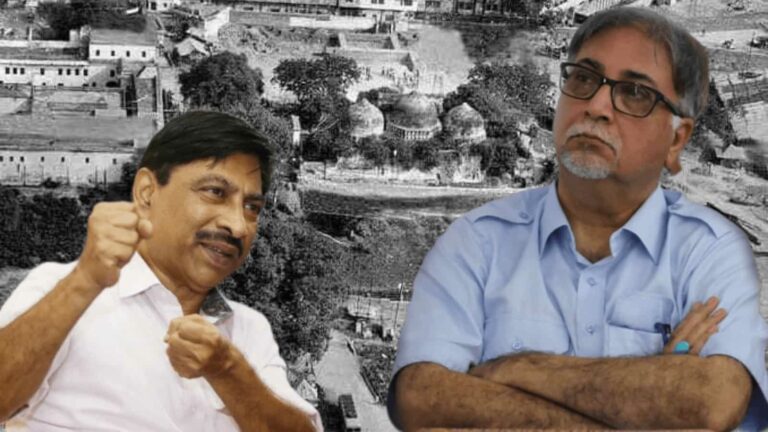
K. K. Muhammed, lies & fake propaganda

0

K. K. Muhammed Sāhib is once again in the news with his straight-from-the-hip “lie bullets”.

In 2019 the Times of India in its 1st October edition reported his double claim:

1) He was the only Muslim member of the team that excavated at Ayodhya initially in 1976-77 under BB Lal. To quote: “I was a member of the excavation team and the only Muslim who had participated in the excavation.”

2) BB Lal in these excavations found the remains of a Ram Temple. He claimed, “When we went inside, I saw 12 pillars of the mosque which were made from temple remains.”

A few days later, in fact on 12th October 2019, the same newspaper printed my rebuttal that as per his Personal File and CV this was not a fact and that even the Archaeological Survey of India Report of that year fails to mention his name as a member of the said team.

On the 14th TOI rebutted me by claiming that BB Lal in an “email” remembers KK Mohammad to have been “in the team”. But the same report quoted two or three other former officials to the effect that KK Mohammad was actually there as one of the trainee students of the Institute of Archaeology, Delhi!

Being the “only Muslim member of the team team” and being on the site as a student are two different things!

But now in 2024, as the Ayodhya temple is being consecrated, KK once again started repeating his wrong claims, and many English and Malayalam and English newspapers and channels in Kerala are forwarding his tall claims.

Today I was asked by a channel from Kerala the same questions put up by Professor Malavika Binny, the history chair at Kannur University and this is what I replied:

The two assertions that need to be countered are: a) that Mr KK Mohammad was a part of the team that BB Lal led to excavate the Ayodhya site in 1976-77; and b) that BB Lal categorically confirmed the presence of a temple at the place of the mosque.
Let me start by pointing out that BB Lal excavated at Ayodhya over three seasons: 1969-70; 1976-77 and 1979-80. Although, in spite of many demands to publish the entire report of the excavation, he just came up with interim reports. The entire full report of the excavations never came out. However brief reports of each season did find place in the annual Archaeological Survey of India Reports (ASIR / or simply IAR) of these particular years. You may access these reports either in the ASI library or anywhere else: IAR 1969-70, pages 40-41; IAR 1976-77, pages 52-53; IAR 1979-80, pages 76-77.

These are also available on the ASI website and anyone can download them or simply read them. None of these reports make a mention of a) any sort of temple remains (pillars, bases etc). There is no allusion even to anything of that sort. b) None of these reports make any mention of any K. K. Muhammed as part of the teams involved in these excavations. It was only and only when Mr LK Advani’s rath yatra was making headlines due to their trail of riots and mayhem from 1990 to 1992, leading to the demolition of the mosque of Mīr Baqi at Ayodhya that suddenly BB Lal wrote an article in an RSS mouthpiece and remembered that he had “encountered” pillar bases of a temple at the site near the mosque! From 1970 to 1991 he did not mention his “find”! His memory returned only when the political Ayodhya movement heated up! Why did he not report such an important find in any ASI journals or publications? Why did he get it published in an RSS mouthpiece known for its rantings and unsubstantiated claims?

So to say now, after decades that BB Lal’s excavations found (even a lame claim) for the existence of a temple, or even any other structure is not only a travesty of truth, but a blatant lie.

As for the assertion of Mr K. K. Muhammed being a “part of the team”: it is at best a fantasy and at worst a totally misleading assertion. It was in 2019 that Mr Mohammad suddenly remembered that he was a part of the team of BB Lal in 1976-77. In that particular year he was at the Department of History and his personal file (accessed by me as the Chairman Department of History in 2019) makes it clear that he was very much at Aligarh with no leave taken at all! In an interview to the Times of India in October 2019 he claimed that he was a part of the team led by Lal, and that he was the “only Muslim member” and that he “saw” for himself the remains of a temple! And when I countered him on that in an interview published in TOI, that as per the official records, he never left Aligarh and that none of the ASI Reports cited above mentions him as a member of the team.

It was then that suddenly BB Lal, who had made no mention of Mr Mohammad as part of his team, in an “email from London” suddenly remembered that yes he was! The TOI dated 14 October 2019, however had statements of three others, two of whom actually contradicted the statement of Mohammad that he was “part of the team led by BB Lal. Ramakant Chaturvedi, who reportedly retired as Director Municipal Museum, Gwalior in 2007, was quoted as saying that yes Mohammad was there, but “as a student” from School of Archaeology at Delhi. Ashok Pandey, retired Superintendent Archaeology, Bhopal clarified that Mohammad along with 10 other students of the School of Archaeology, were there as part of 2 month on hand “training”. A photographer who retired from ASI in 2005, claimed that K. K. Muhammed was “the only Muslim” in that team! After the publication of this news in TOI, K. K. Muhammed changed his statement and then started claiming that yes he was their as a “trainee student”!

To be a “member of the team led by BB Lal” and be one casual visitor as a student are two different things! I have already pointed out that when he is supposed to be “enrolled” in the Institute, he was actually at Aligarh. His personal file which I accessed in October 2019, is very clear on that! In short, the claim that he was a member of the team led by BB Lal which excavated at Ayodhya in 1976-77 is totally a false statement which is being forwarded now with an intent of getting some political gain! Hope he does get compensated for his desperate efforts in manufacturing a non-existent past.

Another assertion of KK Mohammad is that but for leftists like Irfan Habib and Romila Thapar, the matter would have been amicably solved and that Muslims “should have themselves in a goodwill gesture, handed over the site to the Hindus!

My answer to the first is: Are DV Sharma, the former Incharge of Agra Circle and historian R Nath also “left”? Both were vehemently critical of KK Mohammad and his lies! In fact DV wrote two books on this!

For the second my response is: There would have been no controversy if the Muslims would have unilaterally submitted, is at best his personal opinion. Everyone has a right to have his or her opinions. K. K. Muhammed is most welcome to hold his own views. Having been a student of history I can not speculate what would have happened if this had not happened. To me the entire case in the courts was a matter of whose property it was. Even the Supreme Court ultimately did not find even an iota of evidence as to whether there was a temple there or not: the matter was decided on majoritarian faith! Perhaps K. K. Muhammed is also referring to the majoritarian bullying before which he believes that the weak minorities should have submitted. No concrete evidence was ever produced.

Secondly, as per our Acts of Parliament, the nature of the monument as at the time of Independence is to be maintained, and that is what anlso our Constitution is all about. The case of this dispute had been in the courts much before even the parents of Professor Irfan Habib were even married! Neither was he in any way a party to it. The case in the High Court in favour of not harming a heritage structure was being fought between those who wanted to remove it by force (which they ultimately did in 1992) and a host of others led by the Babri Masjid Action Committee.

Habib was asked his opinion as a leading historian and he gave his advice. The structure removed forcibly was representative of an age, it was a part of our heritage and the Constitution was guaranteeing its existence. Perhaps history will not forget or forgive people who try to twist facts for their personal benefits. None of the evidence collected by the historians was ever contradicted by any court. Actually if you read the Supreme Court judgement, it endorses what historians like Habib had been saying. It however pointed out towards the criminality of those who destroyed the mosque and the communal harmony of the country.

This was originally posted by Professor Ali Nadeem Rezavi on Facebook

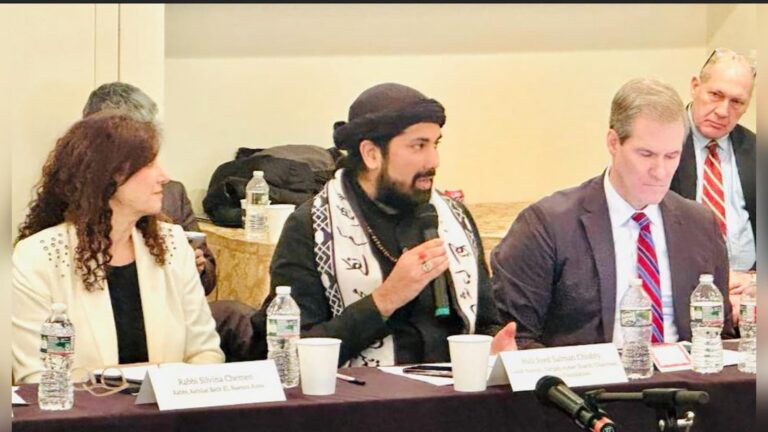
Ajmer Sharif to Princeton: Chishty Foundation Leads Global Discussion on Human Rights and Faith

The International Consultation of Spiritual Elders hosted a momentous gathering at Princeton University to discuss the future of the Universal Declaration of Human Rights (UDHR), with a focus on faith-based initiatives. Featuring renowned scholars and religious leaders including Haji Syed Salman Chishty, chairman of the Chisty Foundation. This press release provides a detailed account of the insightful dialogues and emphasizes the Chishty Foundation’s commitment to promoting global cooperation and understanding.

Renowned spiritual leader, Haji Syed Salman Chishty, Gaddi Nashin of Dargah Ajmer Sharif and Chairman of Chishty Foundation had very successful spiritual and academic gatherings in United States of America and the highlight was the compelling dialogues at Princeton University in New Jersy as International Consultation of Spiritual Elders, bringing together global experts, policymakers, religious and academics leaders to delve into the future of the Universal Declaration of Human Rights (UDHR) with focus on Faith based Initiatives.

Insights from Leading Scholars and Religious Leaders, including Haji Syed Salman Chishty, Prof. Mary Ann Glendon, Kyai Haji Yahya Cholil Staquf, Reverend Henry C. Ndukuba, Prof. Muhammad Najib Azca, Rabbi Silvina Chemen, Prof. Robert P. George, Prof. Robert W. Hefner, Mr. C. Holland Taylor, Dr. Ajay Tejasvi, Mr Timothy Shah, Shaykh Kabir Helminski, Prince Gharios El Chemor of Ghassan, HE Ján Figeľ, Elder Robert M. Daines, Dr. Stephen Hildebrand, Dr. Ephraim Isaac, Mr. Jake Novak, The Rev. Eugene F. Rivers III, Phra Anil Sakya, Rev. Jonathan St. André, T.O.R. addressed the urgent issue of preventing identity weaponisation, highlighting the UDHR’s role in embodying a civilizational vision.

Haji Syed Salman Chishty, with decades of spiritual leadership and global engagements on behalf of Ajmer Sharif, India enriched the dialogue with profound insights and teachings as in his remarks mentioned the importance of “Our faith traditions can become sources of cooperation and, as we have found at the Ajmer Sharif Dargah, energised by the power of Divine Love power of divine love itself. The very motto of the Sufi Saint enshrined in Ajmer Sharif, Hazrat Khawaja Moinuddin Chishty, “Love Towards All; Malice towards None” expressed as “Serving all of God’s Creation with Unconditional Love” is how we honour the dignity of all and serve the Creator of All. We express our love of God in our service to His family, the entire human family. Further, we believe this attitude of inclusion is grounded in an attitude of human unity expressed with clarity in the Quran Sharif.

DID MUSLIMS CONSIDER HINDUS AS KAFIRS?

In the Surah Al Hujurah God Almighty addresses all humanity reminding us that He created our diversity, “Oh Humanity, We created you all from a male and a female, and made you the nations and tribes so that you may know one another. Truly, the best amongst you in the sight of Allah are those with Taqwa(God’s Consciousness). Surely, God is All Knowing and Awareness. “

This collaboration with Princeton University’s James Madison Program on American Ideals and Institutions underscores the application of legal and ethical principles to contemporary challenges, promoting civic education and a deeper understanding of constitutional law and Western political thought.

Nahdlatul Ulama, the world’s largest Islamic organization, led by Kyai Haji Yahya Cholil Staquf, plays a pivotal role in preventing political identity weaponization, fostering solidarity among cultures. The G20 Religious Forum (R20), initiated by Nahdlatul Ulama, strives for a rules-based international order based on shared moral and spiritual values.

The Center for Shared Civilizational Values (CSCV), the G20 Religious Forum’s permanent secretariat, is committed to preserving a rules-based international order rooted in universal ethics and humanitarian values.

Through compelling keynote addresses, all the esteemed leaders offered thought-provoking perspectives on how diverse peoples, faiths, and nations can collectively fulfill a shared vision.

Why is INDIA’s decision to boycott anchors politically immature?

0

Why is INDIA’s decision to boycott anchors politically immature?

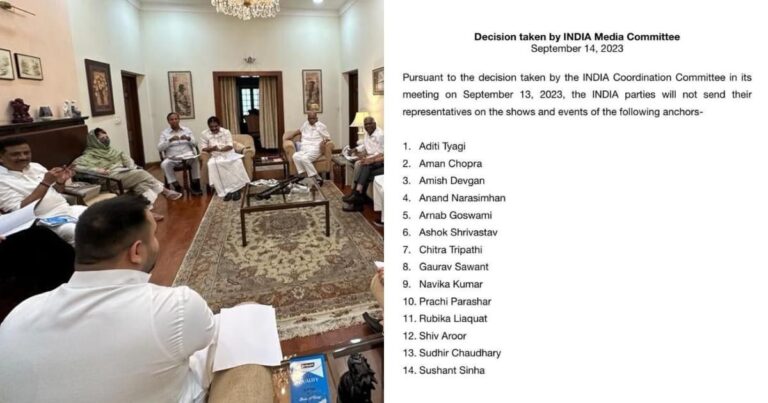
On Thursday, the Indian National Developmental Inclusive Alliance (INDIA) released a list of 14 television anchors/journalists saying “the INDIA parties will not send their representatives on the shows and events of” these 14 anchors.

The supporters of INDIA are hailing the decision as an important step towards combating hate as they believe that shows of these 14 anchors are spreading hate, especially anti-Muslim, in the Indian society. A criticism which is coming from within the supporters of INDIA is that the list is too short and misses out on several prominent names of Godi media (a name popularised by former NDTV anchor Ravish Kumar for the anchors who praise BJP and Narendra Modi).
We need not mention that BJP supporters are criticising this step as an attack on the freedom of press.
As a political analyst one should scratch the surface a bit and try to understand how the Indian public will receive this decision.

Does a boycott of the media help? The answer is complex.

Kanshiram, founder of Bahujan Samaj Party (BSP), stressed upon developing the BSP’s own means to reach out to the public because he believed that a media owned by Upper Castes would never spread his message honestly. For that BSP cadre used to paint walls in the villages with their messages. But, did he ever call for a boycott of those journalists whom he criticised? No. In fact, Kanshiram gave interviews to all the major televisions in the late 1990s. While on the one hand Kanshiram cautioned his followers against the media, on the other he knew the power of mainstream media and never shied away from exploiting any chance of using it.

Ladki hun; Lad Sakti hu: Will slogan be a game-changer in UP

Another example, more recent in public memory, is Narendra Modi led Bharatiya Janata Party (BJP). The relationship between NDTV (till recently) and BJP was no secret. Similarly, Karan Thapar has himself talked about the blanket ban BJP has imposed on its leaders against featuring on his shows. Barkha Dutt, Ravish Kumar, Siddharth Varadarajan, Shekhar Gupta etc. have been completely boycotted by BJP in the last one decade. BJP used a term ‘presstitutes’ (hybrid of Press & Prostitute), which according to wikipedia was popularised by the BJP leader General V.K Singh, for the journalists critical of their politics.

The difference lies in the fact that while almost everyone knew about this boycott of journalists by BJP there was no public declaration of this boycott. There was a tweet in 2014 about boycotting NDTV but anchors were not mentioned. This is about the politics of BJP. They leave this space of taking enemies in their fold. MJ Akbar used to be one of the fiercest critics of BJP who ended up in BJP. So they leave that chance. In my view, INDIA could have boycotted these anchors without publicly announcing a list.

Realizing ‘the hate’ these anchors are spreading?

Another point which has been raised by several critics is that why does Congress and its allies take so long in recognising the political inclination of these anchors? For almost a decade they have been following a pattern. Then what happened so close to 2024 elections that they realised ‘the hate’ these anchors are spreading?

Moreover, all of these 14 anchors have a large following on social media as well. They are already identified by BJP supporters as one of their own. The audience they cater to is a follower of a certain political ideology. This list of the boycott will only help them among this audience. For a BJP supporter this is a document which proves loyalty of these anchors towards ‘the nation’. It will further divide the Indian public into two blocks where people will listen to journalists of their own choice creating echo chambers of opinion.

What INDIA could have done was to either engage with these anchors or to boycott them without making it a spectacle. This decision, so close to the general election, will not be seen as a fight against hate but as a move to attract votes.

Burcin Mutlu-Pakdil : The Woman Who Discovered a New Galaxy:


In the world people talk about Muslim women and the Hijab, specifically in India. Here the answer..

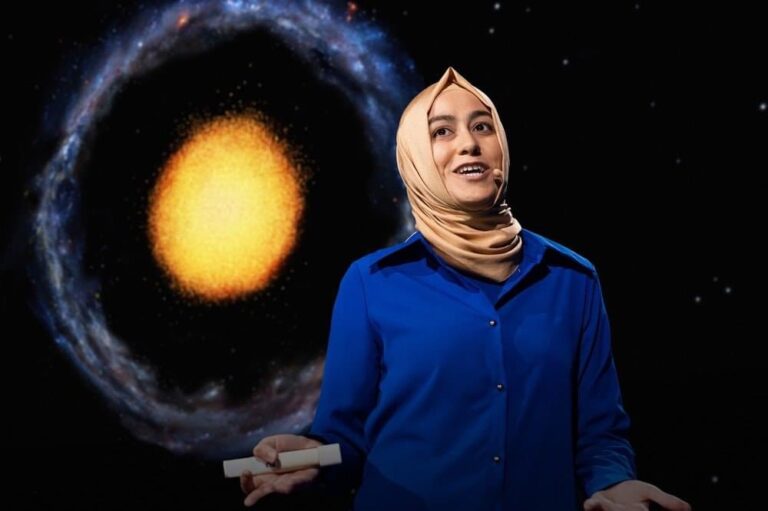
Burcin Mutlu-Pakdil is a Turkish-American astrophysicist. She was born in Istanbul, Turkey, and is a Muslim. She received her Bachelor of Science degree in physics from Bilkent University in 2006. She then moved to the United States to pursue her graduate studies, earning her Master of Science degree in physics from Texas Tech University in 2008 and her Doctor of Philosophy degree in astronomy from the University of Minnesota in 2013.

Mutlu-Pakdil’s research focuses on the formation and evolution of galaxies. She uses large imaging surveys and tailored follow-up observations from large telescopes to discover and characterize the smallest and faintest galaxies in the universe. Her work has led to the discovery of several new galaxies, including Burcin’s Galaxy, which is a rare example of a double-ringed elliptical galaxy.

Mutlu-Pakdil is also a strong advocate for diversity and inclusion in science. She is a member of the American Astronomical Society’s Committee on Women in Astronomy and the Association for Women in Science. She is also a co-founder of the Women in Physics and Astronomy (WIPA) program at Dartmouth College.

Mutlu-Pakdil wears the hijab, which is a headscarf that covers the hair and neck. She has said that she wears the hijab because it is a part of her religious beliefs and that it makes her feel more comfortable and confident. She has also said that she does not believe that the hijab should prevent her from pursuing her dreams or from contributing to science.

Mutlu-Pakdil’s beliefs are centered around her faith in Islam. She believes that science and religion can coexist and that they can both provide insights into the world around us. She is also a strong advocate for education and believes that everyone should have the opportunity to learn and grow.

She is the first Turkish woman to receive a PhD in astronomy from a US university. She is a co-author of the discovery paper for Burcin’s Galaxy.

Her research has been featured in several popular science magazines and websites, including Scientific American, The New York Times, and National Geographic.

She is a TED Fellow and a recipient of the AAAS IF/THEN Ambassador Award.

Mutlu-Pakdil is a role model for young women who are interested in science. She is an inspiration to many and her work is helping to break down barriers for women in STEM fields.